


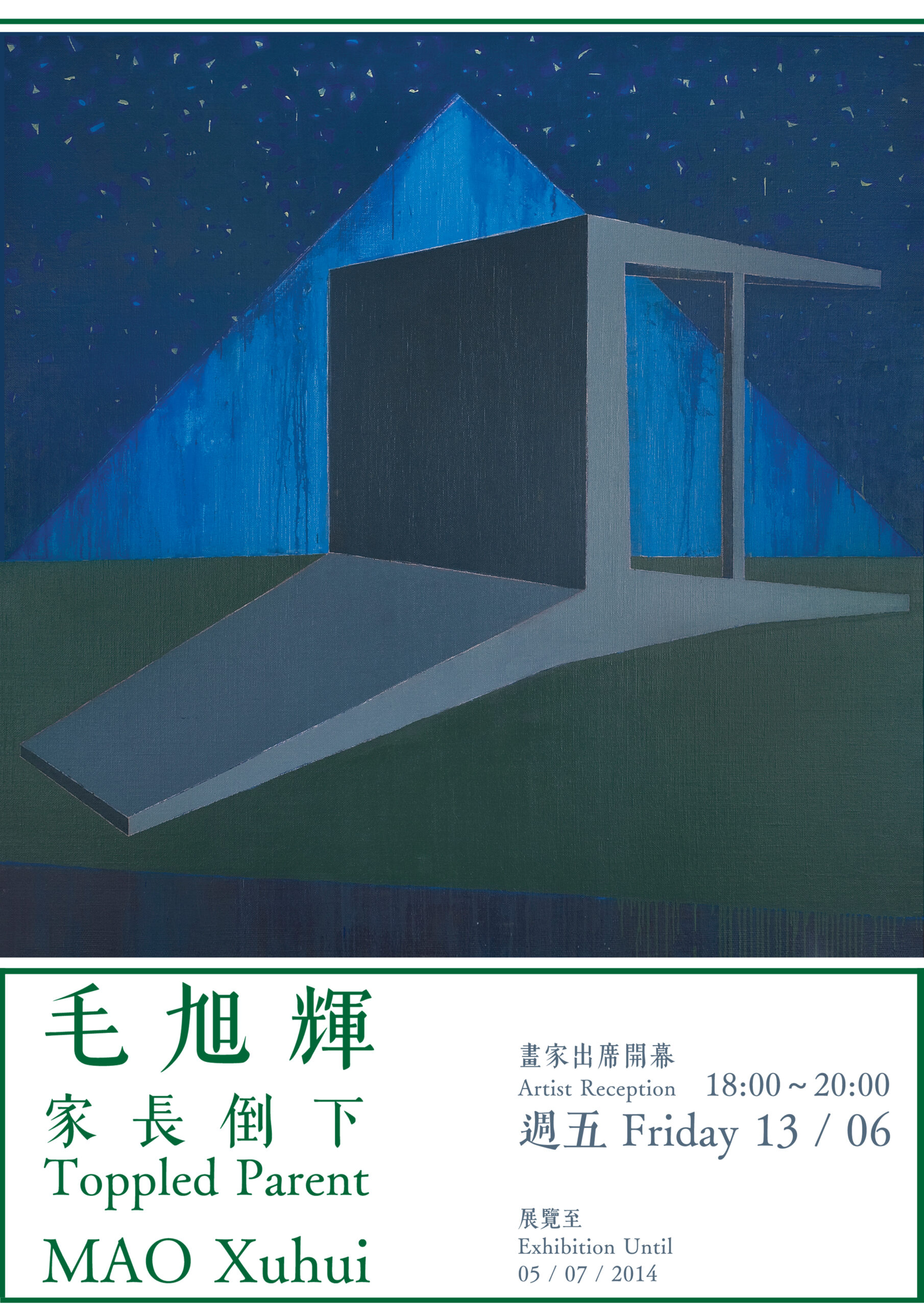
Artist’s Reception
Friday 13 June 2014, 6pm – 8 pm
Exhibition Period
13 June – 5 July 2014
Hanart TZ Gallery
401 Pedder Building, 12 Pedder Street, Central, Hong Kong
MAO Xuhui: Toppled Parent
Hanart TZ Gallery is proud to present Mao Xuhui’s solo exhibition “Toppled Parent”, opening on 13 June till 12 July, 2014. The upcoming exhibition will showcase recent works by the artist. Symbols of the Parent have accompanied Mao Xuhui’s artistic journey for three decades, and they have stirred strong cultural sentiments along the way. The artist has represented the Parent as the father figure, the seat of power, the flag and the scissors; all of which have been recognised as iconic artistic imageries that symbolise this era of tumultuous transformation. “Power of the parent” harks back to the language of early modern China when the traditional family order was attacked as “feudal” and oppressive, and such criticisms have evolved with national politics into the eventual totalitarianism of China’s modern state. It is a loaded imagery requiring unpacking. The Marxist interpretation of “feudalism” was grafted onto the traditional Chinese family clan social system, and with the collapse of the old social order, clanship was made the scapegoat of modern authoritarianism to symbolise “feudal oppression”. The Parent has toppled, but it hasn’t gone away; what has changed is its modern meaning. It is undisputable that the toppled Parent will continue to determine the locus of reference for the human world, but the aesthetics of the toppled monument points to a different order of beauty. The Parent was indeed the pivotal reference of traditional social order based on clanship, but that pivot was founded on the principle of the “five moral pillars”. The modern nation state has debunked the old moral principle in favour of a power structure based on the principle of “rights and duties”, now made the new basis of the Parent’s rule. Authoritarian state power was understandable in the days of national emergency, but it has also toppled the role of moral order and usurped the Mandate of Heaven. Mao Xuhui’s Parent brings with it the memory of this earlier moral order while it comments on recent politics. It is undisputable that the toppled Parent will continue to determine the locus of reference for the human world, but the aesthetics of the toppled monument points to a different order of beauty.
“Mao Xuhui first depicted a pair of scissors as a figure sitting on a throne: a surrealistic representation of paternal power. As his iconography developed, the image of the scissors was released from its throne to become a surreal presence making rude intrusions into domestic interiors and urban landscapes. During the 1990s, the scissors gradually became a completely distilled figure, purified of its background; and it emerged as one of the most convincing iconic images to have evolved from the pictorial work of this era. In this singular iconic form is concentrated the innuendos of power, worship and exorcism.”
- Chang Tsong-zung, Hanart 100: Idiosyncrasies ,2014
” In 1985 Mao Xuhui was a leading artist in the Southwestern Group. Beginning with ‘Body’, his earliest work, and continuing through, ‘Bric-a-brac’, Mao has never ceased to address the question of “existence”. An exemplar of the taciturn existentialist, he remains indifferent to fame and fortune.”
- Gao Minglu, The 100 Most Influential Artists in Chinese modern Art, 2005

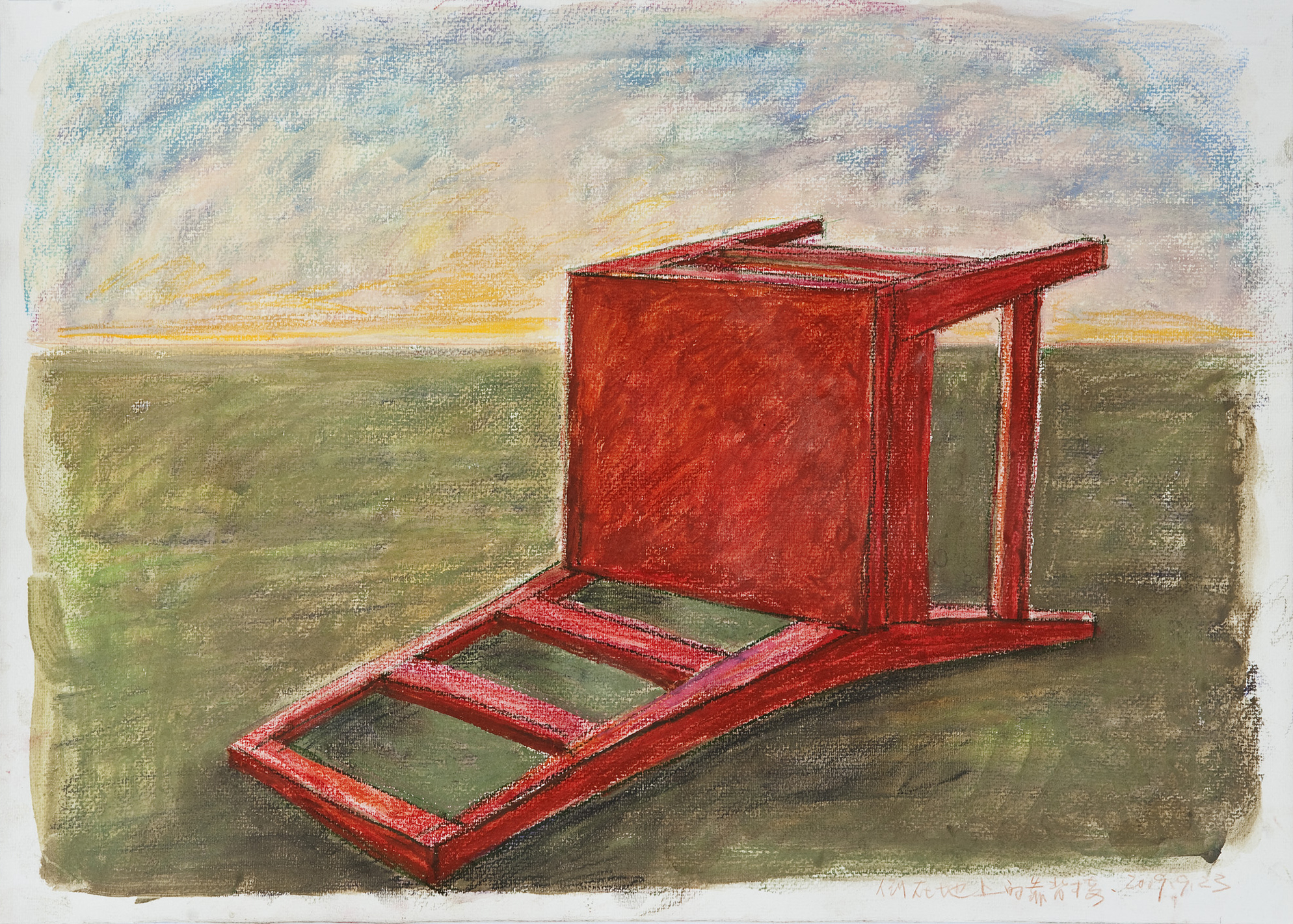
Backed Chair Fallen on the Ground
2009
Oil on Canvas
39.5 x 55 cm
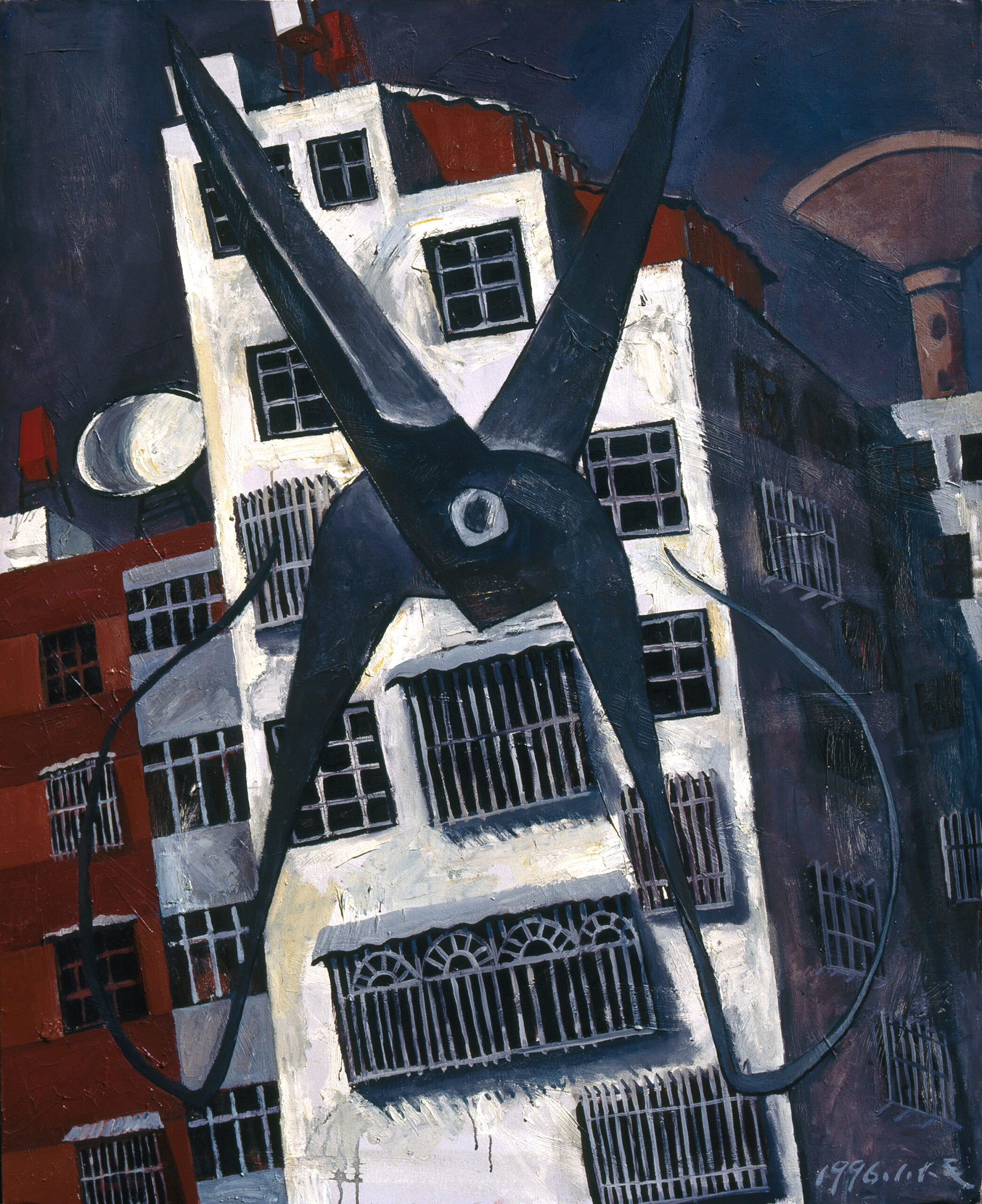
Scissors and Buildings in the Community
1996
Oil on Canvas
134 x 112 cm

Glory, Passage of Time No.3
2006
Oil on Canvas
160 x 200 cm
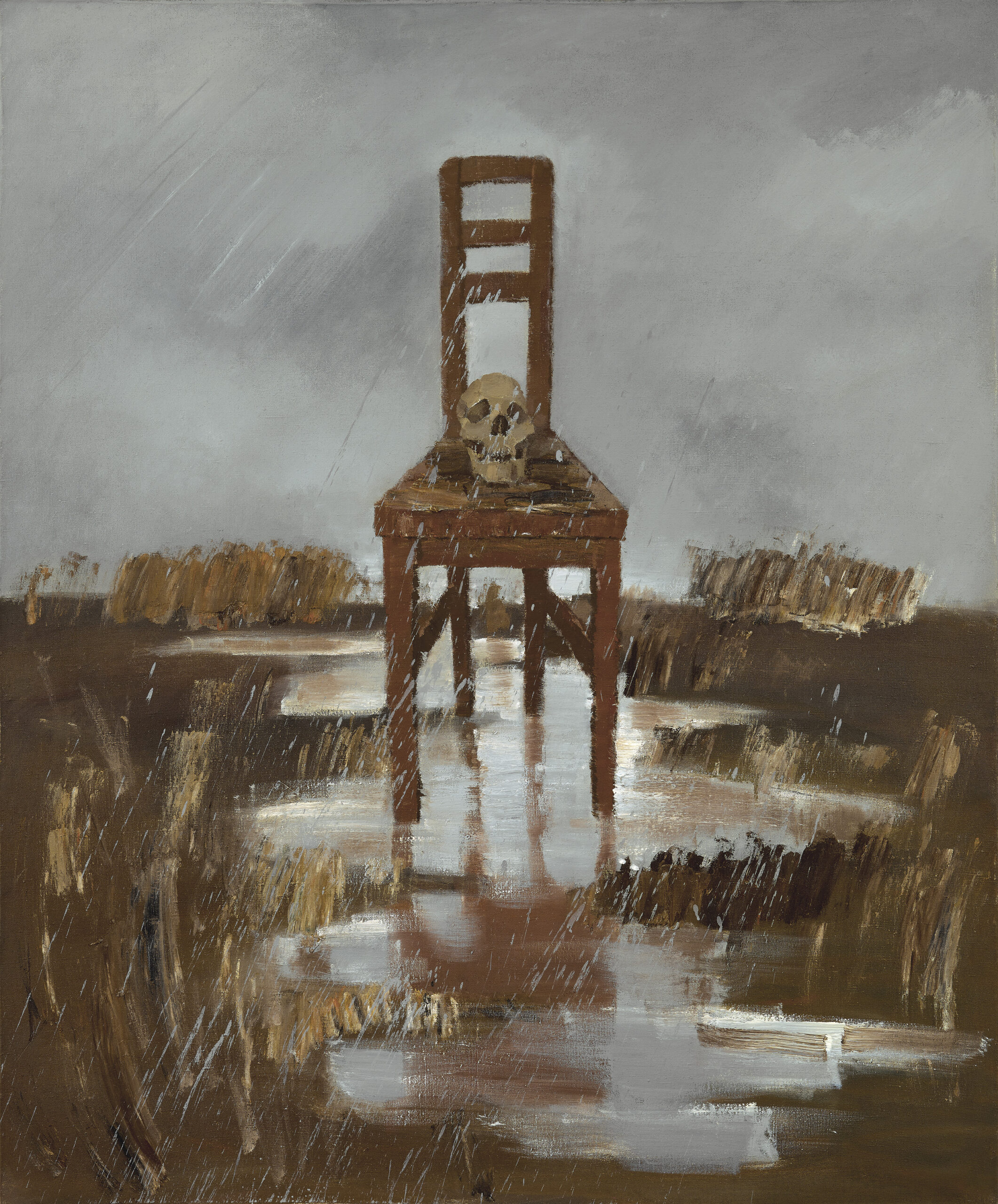
Glory, Rainy Season No.1
2005
Oil on canvas
145 x 120 cm
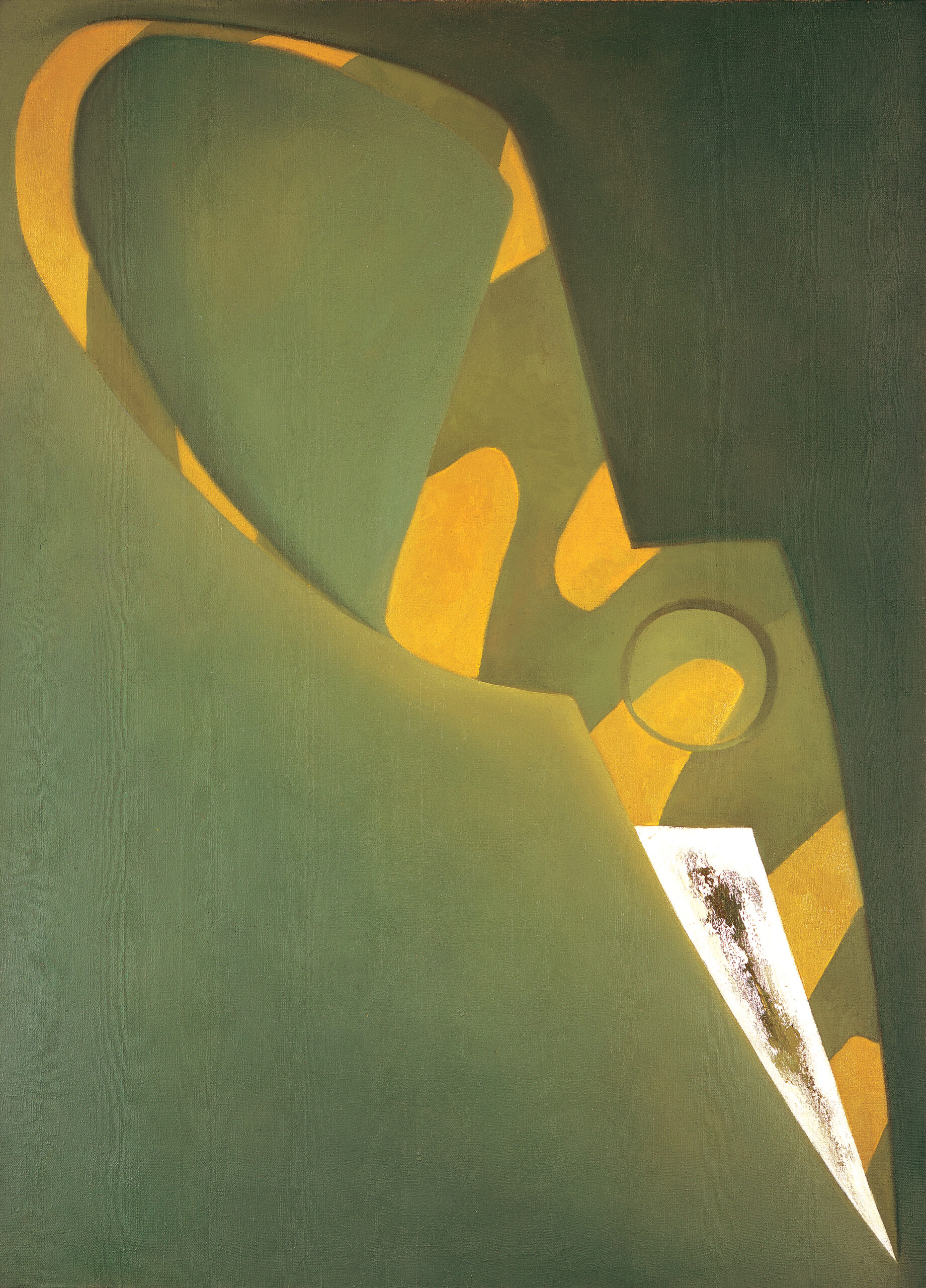
Half Scissors in Camouflage Pattern
2004
Oil on Canvas
180 x 130 cm